
About QuakeCode

QuakeCode was founded in Houston in 2025 with the mission of preventing earthquake hazards and improving public safety through innovative technologies. The company specializes in earthquake magnitude prediction, b-value prediction, DAS (Distributed Acoustic Sensing) data analytics, earthquake site monitoring, and subsurface Co₂ storage monitoring with data visualization systems.
By combining expertise in earth sciences with modern computational tools, QuakeCode develops machine learning intelligent models and real-time monitoring solutions to assess seismic hazards and support decision-making across government, academic, and industrial sectors.
In addition to earthquake prediction, the company contributes to environmental sustainability by supporting the secure management of underground CO₂ storage and other natural resources critical to global climate goals.
Technologies and Tools We Use
At QuakeCode, we use a variety of technologies to support our work in earthquake prediction and monitoring. Our core programming languages and libraries include Python, TensorFlow, Keras, pandas, Matplotlib, Plotly, Geopandas etc. for data science, machine learning, and visualization. We work within powerful development platforms such as Jupyter Notebook, Google Colab, Anaconda, Visual Studio Code, and Xcode. For cloud services and DevOps, we rely on AWS, Unix, Ubuntu, GitHub, and Codemagic to ensure scalable, efficient, and collaborative workflows. In addition, we build mobile and web applications using Flutter, Flask, and native iOS development tools to deliver accessible, user-friendly interfaces.
Our Vision
At QuakeCode, our vision is to advance the science of earthquake prediction to reduce risks and save lives. By developing accurate and timely earthquake magnitude and b-value predictions, we provide critical information that helps governments, emergency responders, and communities prepare and respond more effectively.
Our innovative technologies enable early warnings, improve seismic hazard assessments, and support infrastructure resilience planning. Beyond seismic prediction, we create value by contributing to environmental sustainability through monitoring and managing underground CO₂ storage and other vital natural resources.
Ultimately, we strive to minimize the devastating impacts of earthquakes, protect lives and property, and contribute to safer, more prepared, and sustainable communities worldwide.
Method
Supervised Deep Learning
Supervised Deep Learning (DL) method has been used to predict of the future maximum magnitude over 60 days based on actual training and testing data of seismic and associated parameters. The DL method is the most important technique for machine learning and artificial intelligence that uses multilayered neural networks to extract high-order features (1,2). Deep Neural Network (DNN) is mathematical models based on the neural structure of intelligent organisms, specifically the human brain (3-4). Their main characteristics are learning, generalization and abstraction capacities, which they obtain through the search of relationships, automatic construction of models and corrections based on experience, in order to reduce their own errors (5-7).
XGBoost (Extreme Gradient Boosting) is a powerful ensemble learning algorithm based on gradient boosting of decision trees. It builds an additive model in a forward stage-wise manner, optimizing a differentiable loss function. XGBoost is well known for its high performance and scalability, particularly with structured/tabular data. The algorithm includes regularization parameters to control overfitting, and it supports column subsampling (colsample_bytree), row subsampling (subsample), and tree-specific parameters such as max_depth and gamma (8-10).
The deep learning (DL) model was employed to predict the maximum earthquake magnitude over the next 60 days, utilizing Python 3 in conjunction with the TensorFlow and Keras libraries. The dataset underwent rigorous preprocessing, and the predictive model was optimized for accuracy. To facilitate the visualization and interpretation of the data, this study also includes data-driven interactive visualizations in 2D (x, y), 3D (x, y, z), and 4D (x, y, z, and color) formats. These visualizations were generated using a range of Python libraries, including Matplotlib, Ipympl, %matplotlib widget, Matplotlib.pyplot, mpl_toolkits.mplot3d, Geopandas, and Plotly. These libraries allow for dynamic and intuitive graphical representation of seismic data trends and model predictions, aiding in a more comprehensive analysis of the results. The entire analysis was conducted in the Jupyter Notebook environment, demonstrating the flexibility and power of these tools in both data processing and visualization. The use of these libraries highlights the potential of interactive visualizations in enhancing the clarity of complex data and enabling a deeper understanding of seismic patterns and prediction accuracy.
Training and Validation Dataset
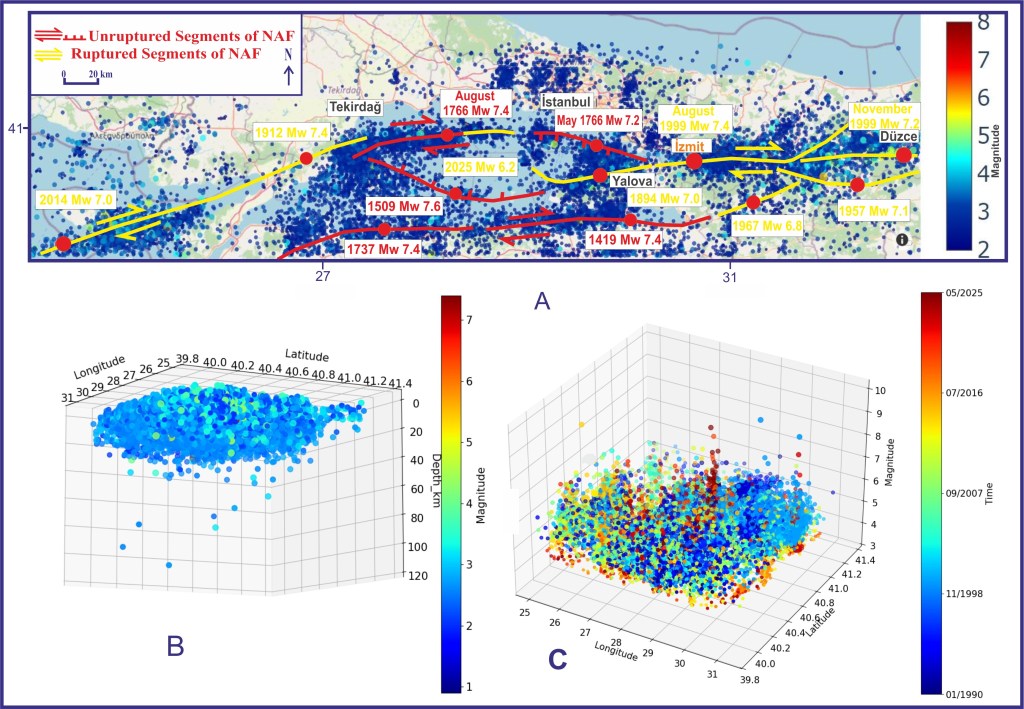
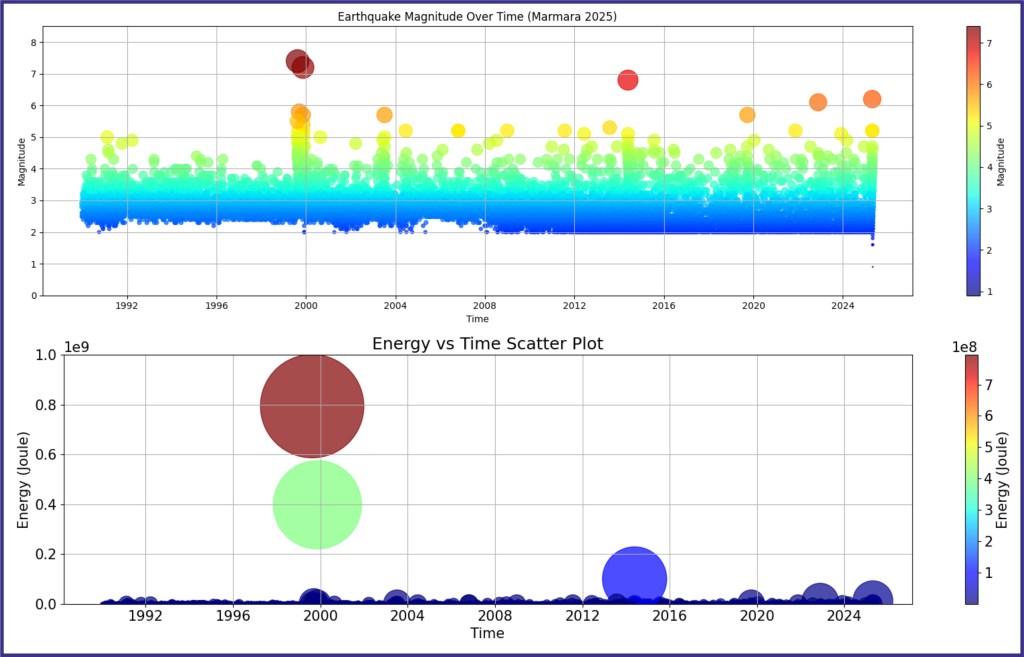
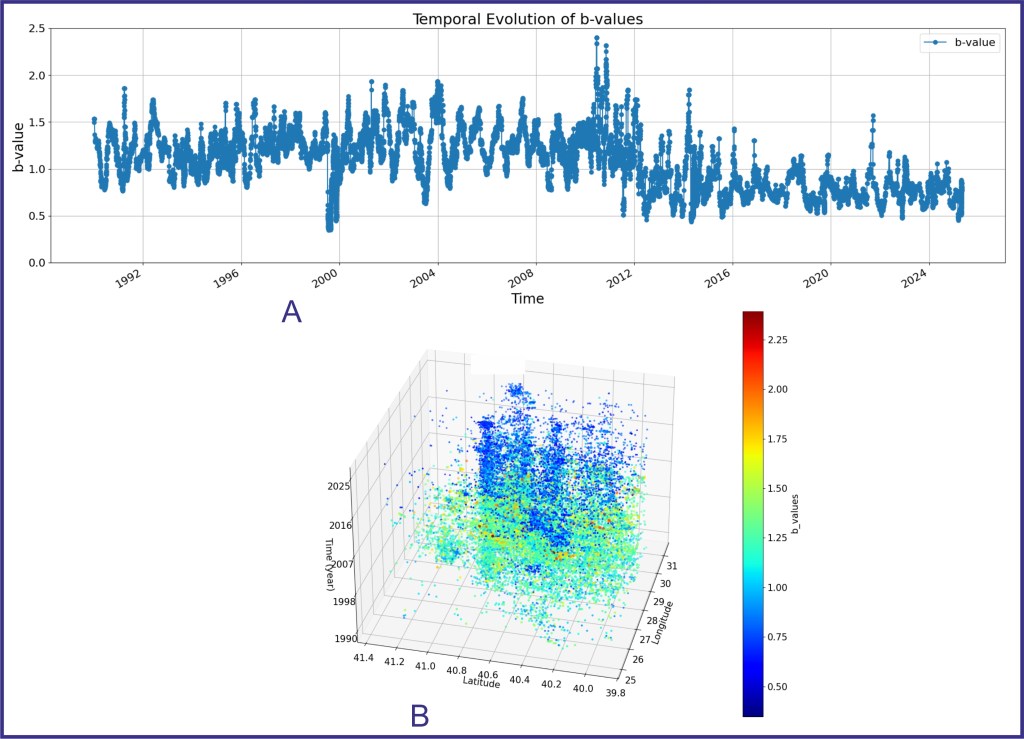
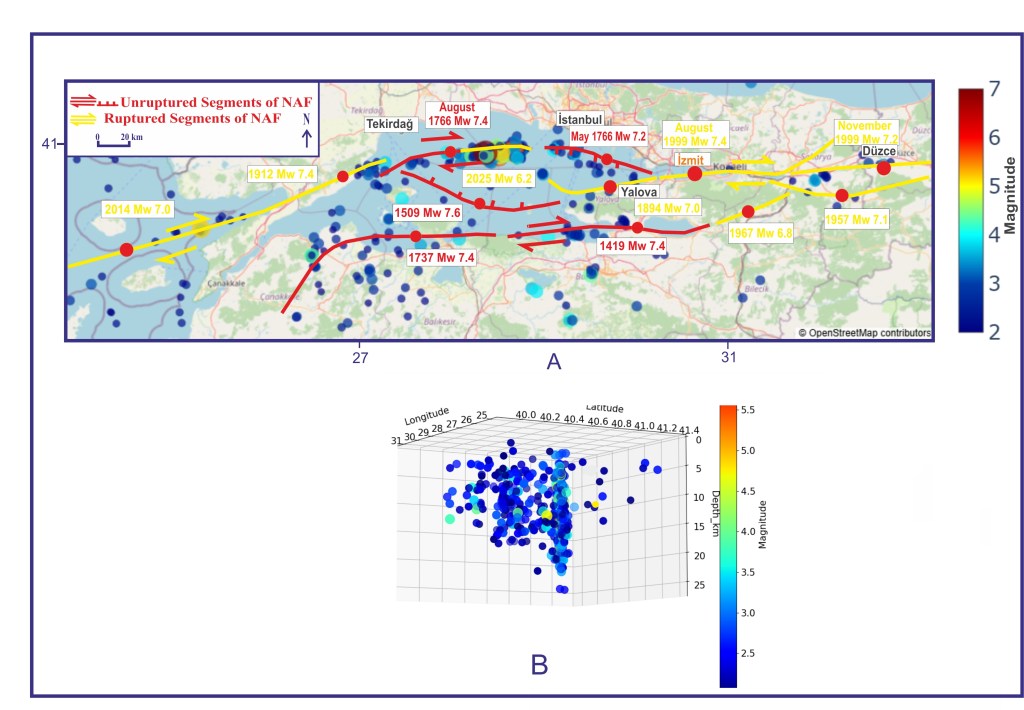
This study utilizes a dataset comprising 24.320earthquakes with magnitudes Mw ≥ 2, recorded between 01/01/1990 and 05/03/2025 in the North Anatolian Fault Zone (NAFZ) within the Marmara Region, based on the Kandilli Observatory Earthquake Catalog
Prediction Model and Its Application
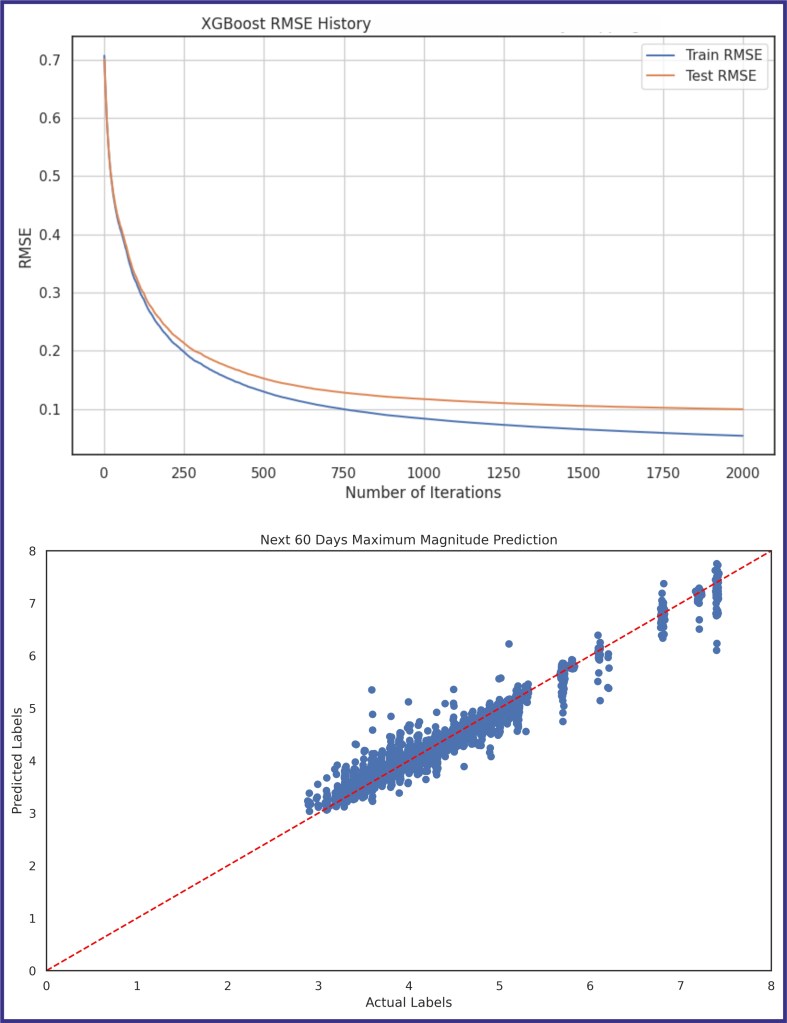
The best mean squared error (MSE) performance was achieved using 1500 estimators in the XGB model. The linear correlation coefficient obtained with the XGB parameters reached as high as R² = 0.96. The model was configured with 1500 estimators, a learning rate of 0.05, max_depth=6, and used no early stopping to avoid premature termination of training. This XGB model was applied to forecast the maximum expected magnitude over the next 60 days in the Istanbul seismic gap.
Prediction Dataset
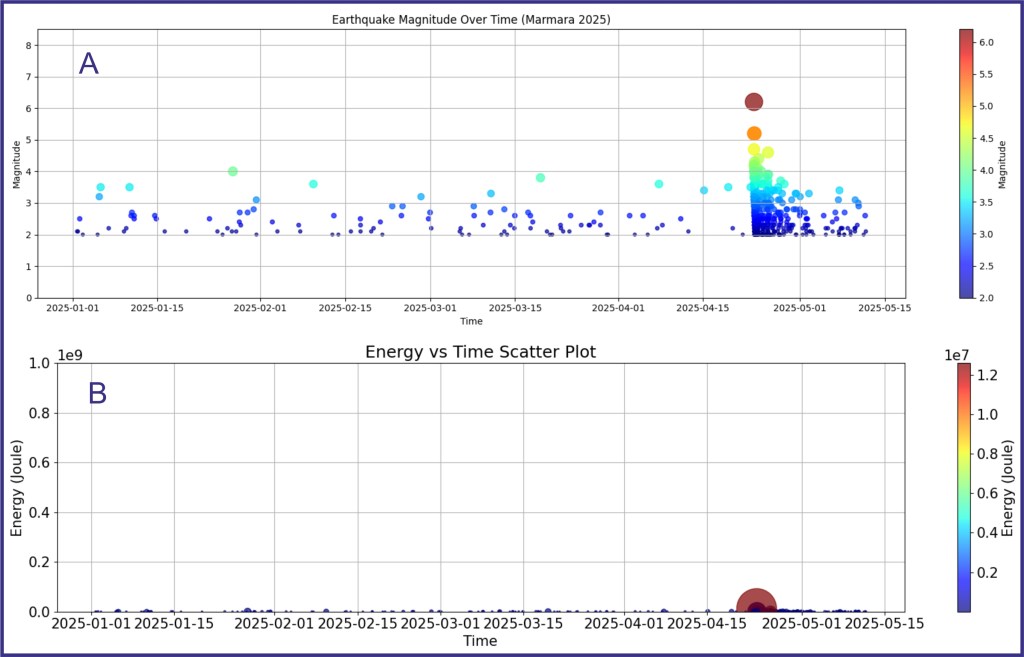
The prediction dataset contains 654 earthquakes with magnitudes greater than Mw ≥2 that occurred between 09/05/2025 and 05/21/2025 in the NAFZ in the Marmara Region according to the Kandilli Catalog
Objective of the Earthquake Prediction App
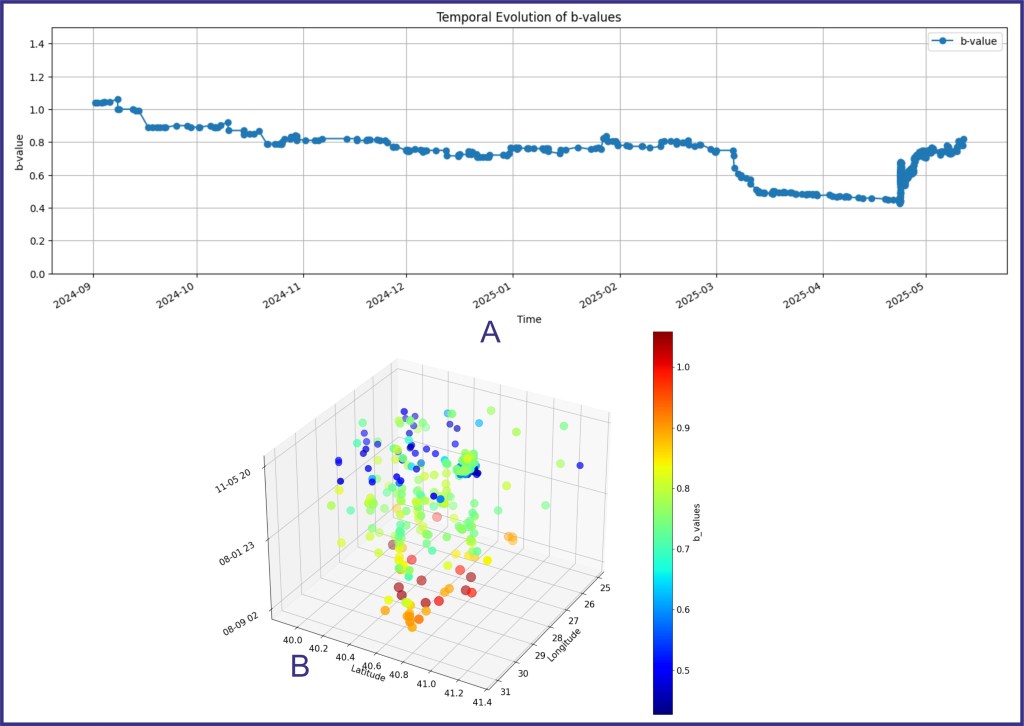
The southern sector of the Istanbul megacity represents a well-known seismic gap, making accurate forecasts of maximum earthquake magnitudes essential for safeguarding nearly 20 million residents. The Earthquake Prediction App presents a Machine Learning-based prediction of the future maximum earthquake magnitudes for 60-day period in the Istanbul Seismic Gap. The model of this App trained on a comprehensive dataset spanning from 1990 to 2025, incorporating seismic data and key associated parameters processed using a sliding window approach which enables a dynamic analysis of seismic activity over time. The proposed framework is applied to the Istanbul seismic gap, offering a robust foundation for advanced seismic hazard assessment. By enhancing predictive capabilities, the App aims to improve early warning systems and support risk mitigation efforts in this densely populated, earthquake-prone region. Leveraging state-of-the-art deep learning techniques, this app provides valuable insights for earthquake preparedness and hazard assessment in the Istanbul seismic gap.
References
1. Chollet, F., 2017. Deep Learning with Python. New York, NY: Manning Publications, 384 p.
2. LeCun, Y., Bengio, Y. & Hinton, G., 2015, Deep learning. Nature 521, 436EP.
3. Hastie, T., Tibshirani, R., Friedman, J., 2009. The Elements of Statistical Learning, second ed. Springer Series in Statistics.
4. McCulloch, W.S., Pitts, W., 1943. A logical calculus of the ideas immanent in nervous activity. Bull. Math. Biophys. 5, 115–133.
5. Rojas, R., 1996, Neural Networks: A Systematic Introduction. Springer-Verlag, Berlin, pp. 502.
6. Alpaydin, E., 2014, Introduction to machine learning: Cambridge, Massachusetts, US, MIT press, 538 p.
7. Nielsen, M.A., 2015. Neural Networks and Deep Learning, vol. 25 Determination Press, USA.
8. Chen, T., Guestrin, C. 2016. XGBoost: A Scalable Tree Boosting System. In Proceedings of the 22nd ACM SIGKDD International Conference on Knowledge Discovery and Data Mining pp. 785-794.
9. Brownlee, J., 2016. XGBoost with Python: Gradient Boosted Trees with XGBoost and Scikit-Learn. Machine Learning Mastery.
10. Zhang, J., et al. 2019. A Comprehensive Review of XGBoost Algorithm and Its Applications. IEEE Access, 7, 134138-134160.
 Shalesys Energy Company